Why Does My Tooth Hurt When I Bite Down? Causes and What to Do
Tooth pain when biting down usually points to a mechanical problem: a cracked tooth, a deep cavity, a failing filling, a recently placed restoration sitting too high, an inflamed pulp, or grinding-related ligament soreness. Because cracks often don't show on X-rays, an in-person bite test is the fastest way to identify the cause.
Tooth pain when biting down usually points to a mechanical problem: a cracked tooth, a deep cavity, a failing filling, a recently placed restoration sitting too high, an inflamed pulp, or grinding-related ligament soreness. Because cracks often don't show on X-rays, an in-person bite test is the fastest way to identify the cause.
At Fresh Smile Dental Care on Royal Lane, we see this complaint constantly. A patient bites into a sandwich at lunch, feels a jolt, and spends the next two weeks chewing on the other side. That avoidance pattern is the first clue. The second clue is which part of the bite triggers the pain, because each cause has a fingerprint.
Here is how we work through it.
What does it mean when a tooth hurts only when you bite down?
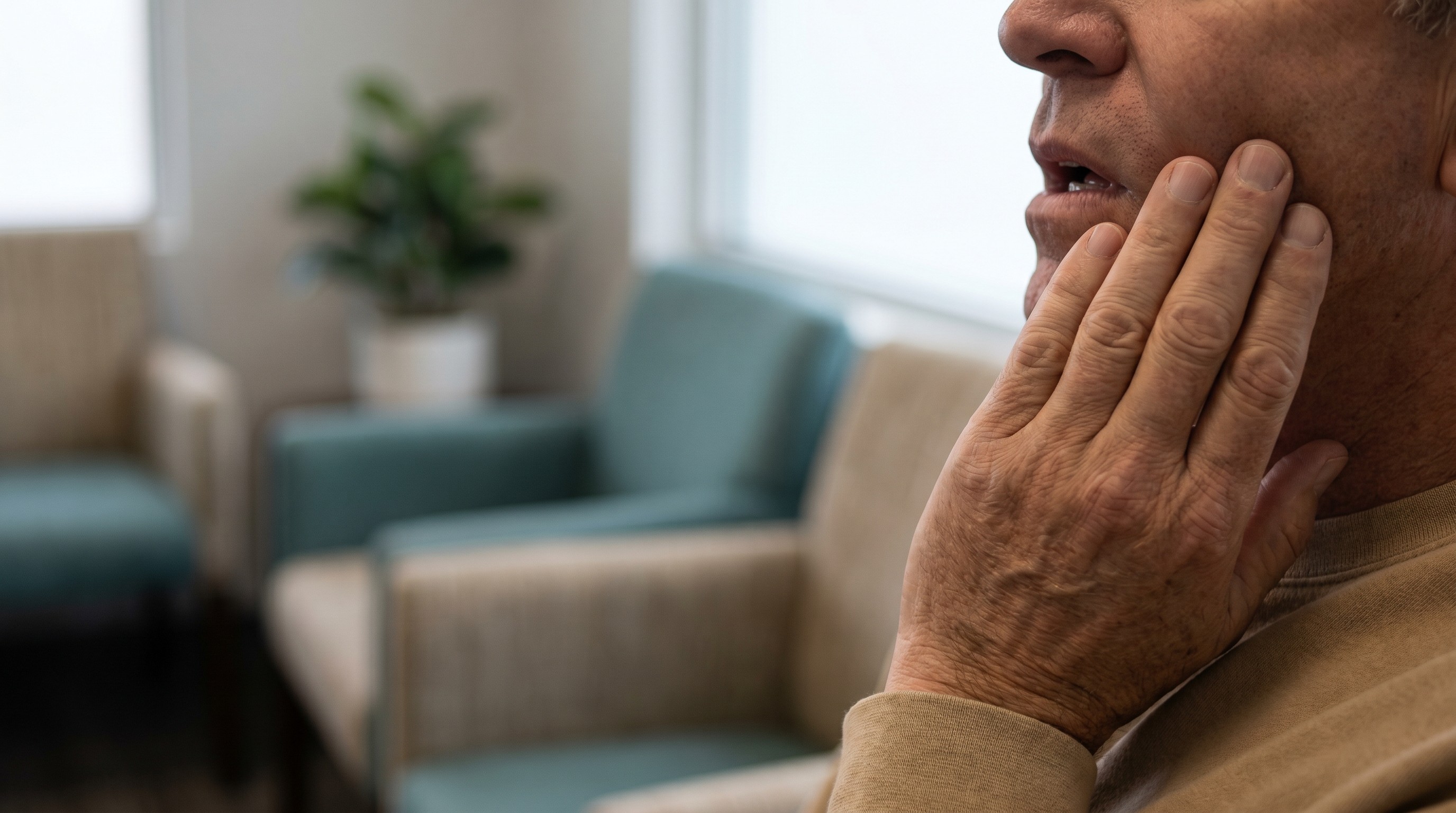
Bite-triggered pain is different from cold sensitivity or a constant dull ache. It tells us something mechanical is happening under load. Pressure is touching a structure that does not want to be touched.
That structure could be a hairline crack flexing open. It could be an inflamed periodontal ligament wrapping the root. It could be a high restoration concentrating force on one cusp. Or it could be pulp tissue inside the tooth that is already inflamed and reacting to even small pressure.
When a patient calls our office from Preston Hollow or Farmers Branch describing bite pain, we usually ask three things. Which tooth. Which direction of pressure. And does it hurt going in, releasing, or both. The answers narrow the list fast.
Could it be a cracked tooth?
Cracked tooth syndrome is the classic one. According to the American Association of Endodontists, it characteristically causes sharp pain on biting and on release of biting pressure. That release pain, the little zing when you let go, is the giveaway.
The frustrating part is that cracks often do not appear on standard dental radiographs. We diagnose them with a bite stick, transillumination, and sometimes dye. Lower molars and teeth with large existing fillings are at higher risk, since old restorations weaken the surrounding tooth structure over years of chewing.
Treatment depends on how deep the crack runs. A shallow crack may need a crown to bind the tooth back together. A crack that has reached the pulp usually needs a root canal first, then a crown. A crack that splits the root is unfortunately not restorable.
Catch it early. That changes everything.
Is it a cavity or a failing filling?
Decay is the second usual suspect. When a cavity reaches the dentin or pulp, the tooth becomes pressure-sensitive. Chewing something hard, like a tortilla chip or a nut, lights it up.
Old fillings also fail. A filling from fifteen years ago may have a hairline fracture or a leaky margin where bacteria are now working underneath. The tooth looks fine on the surface and then surprises you on a piece of bread.
We see this often in adults in their 40s and 50s. A woman in her late forties from Carrollton came in last month because chewing on her right side felt strange after dinner at a Korean barbecue place near Royal Lane. The tooth looked clean. The X-ray showed decay tunneling under a twenty-year-old filling. New onlay, problem solved.
Could a recent dental restoration be sitting too high?
If you just had a filling or crown placed and biting hurts on that tooth, the restoration may be a hair too tall. An occlusal adjustment is a common follow-up step after placing new dental work, per ADA guidance.
Even half a millimeter of extra height concentrates chewing force on that one tooth. The ligament around the root gets bruised. The tooth feels tender, sometimes for days.
The fix is quick. We mark the bite with articulating paper, polish down the high spot, and the tooth almost always settles within a few days. If pain lingers past one to two weeks after the adjustment, we look deeper, since the original procedure may have irritated the pulp.
Can grinding or clenching cause biting pain?
Yes. Bruxism overloads the periodontal ligament around multiple teeth, and the ADA recognizes this as a source of chewing tenderness. The signature here is different from a cracked tooth. Several teeth feel sore, not just one. Mornings are worse. You may notice a tight jaw, headaches at the temples, or scalloped edges on your tongue.
Many of our patients who commute from Addison or Irving up the Dallas North Tollway are grinding through stress they did not even realize they had. A custom night guard takes the load off the teeth and the ligaments calm down within a couple of weeks.
Conservative first. Aggressive only when needed.
When does bite pain mean you need a root canal?
If pain lingers after you finish chewing, especially with sensitivity to hot food or drinks, the pulp inside the tooth may already be inflamed beyond healing. The American Association of Endodontists calls this irreversible pulpitis, and it typically requires root canal treatment.
An abscess raises the stakes. You may feel sharp pain when the tooth is tapped, swelling near the gum, a bad taste, or a small bump that looks like a pimple on the gum. That tooth needs to be seen quickly. Waiting risks the infection spreading into surrounding bone.
Root canal therapy at our office is done in-house, usually in a single visit. The tooth is saved. The pain is gone.
When should you call a dentist in Dallas?
Some bite pain resolves on its own, particularly after a new filling. Most does not. Call us if:
Pain has lasted more than two to three days
You see swelling in the gum or cheek
You have a fever or feel generally unwell
The pain wakes you up at night
You cannot chew on that side at all
We hold same-day slots for active pain. Patients from the Asian Trade District and the Koreatown Dallas corridor often walk in straight from work, and folks taking the DART Green Line can hop off at Royal Lane Station two blocks from our door.
Early diagnosis almost always means simpler, less expensive treatment. A small filling now beats a root canal and crown in six months.
Frequently Asked Questions
How can I tell if my tooth is cracked or just sensitive?
Sensitivity from worn enamel or recession usually reacts to cold air or cold drinks and fades quickly once the stimulus is gone. A cracked tooth reacts to pressure, especially when you release a bite, and the pain can be sharp and very localized to one tooth. If you can reproduce the pain by biting on a cotton roll or a popcorn kernel, a crack is high on the list, and you should be evaluated soon.
Why does my tooth hurt to bite on but not when I drink cold water?
That pattern points away from typical nerve sensitivity and toward something mechanical. A crack, a high filling, ligament inflammation from grinding, or an inflamed pulp under pressure all produce pain on chewing without cold sensitivity. The diagnosis usually requires a bite test in the chair, since X-rays alone often miss the cause.
Can a tooth heal on its own if it hurts when chewing?
A bruised ligament after a new filling can settle within days. A cracked tooth, an active cavity, or an infected pulp will not heal on its own and tend to get worse. If bite pain has lasted more than a few days, the tooth is telling you something needs attention.
How long should I wait before seeing a dentist for bite pain?
Two to three days is the outside window for mild pain that is improving. If the pain is intense, waking you up, spreading, or paired with swelling or fever, do not wait. Call the same day. Early treatment is almost always smaller, cheaper, and more predictable.
Will a tooth that hurts when biting always need a root canal?
No. Many cases are resolved with a bite adjustment, a new filling, an onlay, or a crown. A root canal is needed when the pulp tissue inside the tooth is irreversibly inflamed or infected, which usually shows up as lingering pain after chewing, sensitivity to heat, or pain that wakes you at night.
If you can reproduce the pain by biting on a cotton roll or a popcorn kernel, a crack is high on the list.
If a tooth has been bothering you when you chew, do not chew around it for another month. Call Fresh Smile Dental Care at (214) 623-0880 to schedule an evaluation. We are at 1894 Royal Ln #104 in Northwest Dallas, and we speak English, Korean, and Spanish in the office.
Recommendations