Am I Too Old for Dental Implants? Age, Bone Health, and What Actually Matters
There is no upper age limit for dental implants. Candidacy depends on jawbone volume, gum health, controlled chronic conditions, and current medications, not the number on your birth certificate. Patients in their 70s, 80s, and even 90s receive implants successfully when those health factors check out, often with bone grafting when needed.
There is no upper age limit for dental implants. Candidacy depends on jawbone volume, gum health, controlled chronic conditions, and your medication list, not the number on your birth certificate. Patients in their 70s, 80s, and even 90s receive implants successfully when those health factors check out, often with bone grafting when needed.
At Fresh Smile Dental Care, we hear the same worry almost every week. A son or daughter calls on behalf of a parent. Sometimes the patient comes in themselves, a little hesitant, asking quietly whether they've waited too long. The honest answer surprises most people. Age is rarely the deciding factor.
Biology is.
Is there an age limit for dental implants?
No. According to the American Association of Oral and Maxillofacial Surgeons (AAOMS), there is no established upper age limit for implant placement. Dr. Yeo has placed implants for patients well into their 80s in our Royal Lane office, and the long-term success rate for dental implants in healthy adults remains above 95% according to NIDCR and peer-reviewed implant literature.
Here's the part most people don't expect. The age restrictions actually run the other direction. The American Academy of Pediatric Dentistry and AAOMS both note that implants are generally not recommended for patients under about 18 because the jawbone is still developing. A 19-year-old with a missing tooth has more growth-related restrictions than a 79-year-old in good health.
Chronological age is a poor predictor. Biological readiness is the real question.
What actually determines if you're a candidate?
When we evaluate someone for implants, we look at a short list of things that have almost nothing to do with the year you were born:
Jawbone volume and density sufficient to anchor the implant
Healthy gum tissue free of active periodontal disease
Controlled chronic conditions such as diabetes, blood pressure, or osteoporosis
Medication review, especially bisphosphonates and blood thinners
Non-smoking, or willingness to pause during healing
Home oral hygiene that you can realistically keep up
A 72-year-old retiree from Preston Hollow who walks every morning, takes one blood pressure medication, and brushes twice a day is often a stronger candidate than a 45-year-old smoker with uncontrolled diabetes. That comparison plays out in our chairs all the time.
How does bone loss affect older patients, and what can we do about it?
This is the worry behind the worry. Most older patients aren't really asking about age. They're asking about bone.
The American Dental Association notes that bone resorption in the jaw begins shortly after tooth loss and continues over time when the tooth isn't replaced. If you lost a molar twenty years ago and have been chewing on the other side ever since, that ridge has shrunk. It doesn't grow back on its own.
The good news: we can rebuild it. Bone grafting restores ridge volume. A sinus lift addresses bone loss specifically in the upper jaw where the sinus has dropped down over the years. And Dr. Yeo's computer-guided implant surgery lets us place the implant with precision into the bone that's available, sometimes avoiding grafting altogether by using an angled approach.
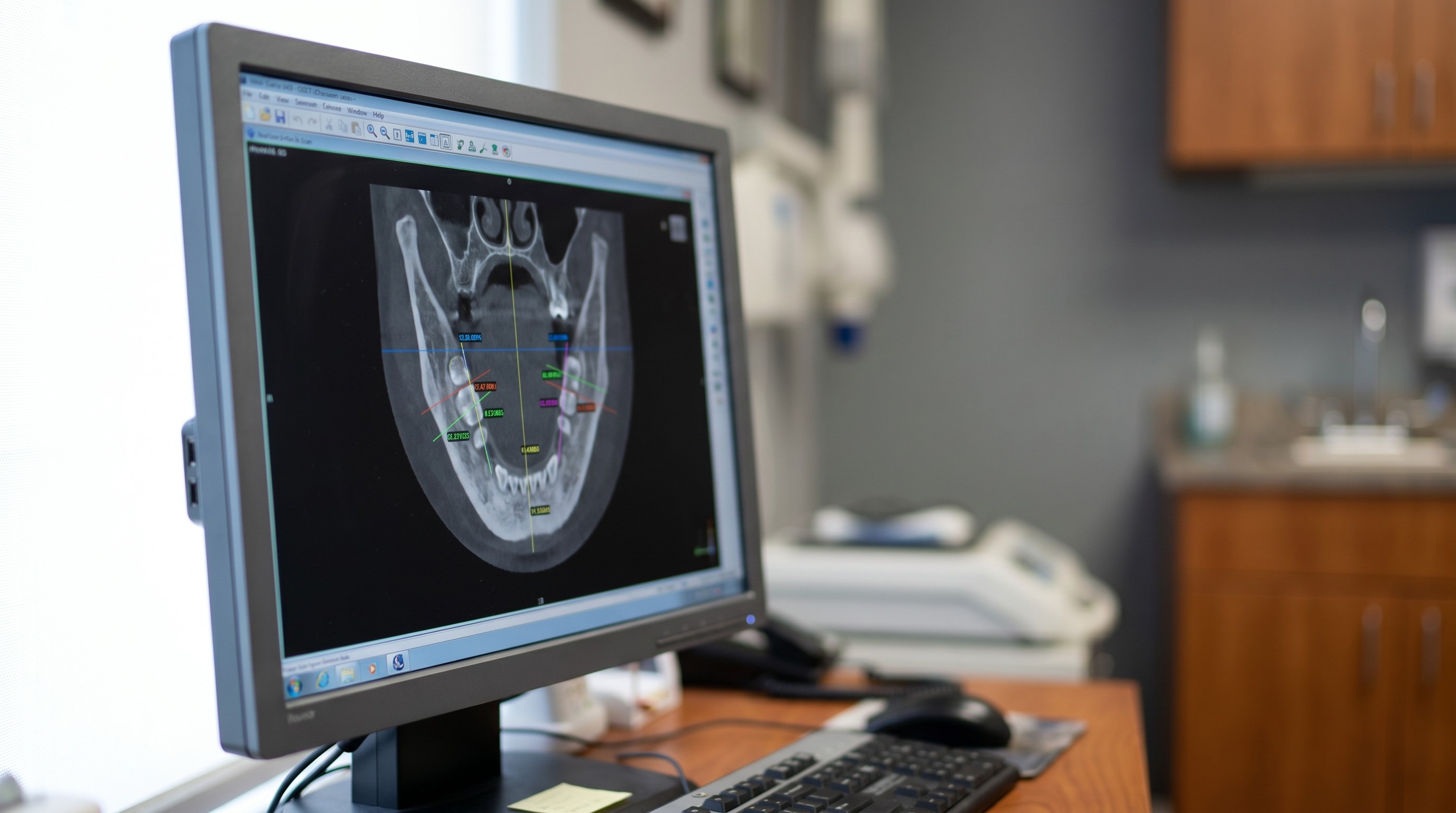
We had a patient recently, a grandmother from a multigenerational Korean-American family in the Royal Lane corridor, who had worn an upper denture for nearly 25 years. She was certain she'd be told no. Her CBCT scan showed thin bone, but not too thin. With a sinus lift on one side and guided placement, she has fixed teeth again.
Twenty-five years of wearing a denture. Still a candidate.
What about diabetes, osteoporosis, or heart conditions?
These are the three questions we get most from patients over 60. Short answers first, then context.
Diabetes. Well-controlled type 2 diabetes is not a contraindication. Research in the Journal of Periodontology and other peer-reviewed dental journals shows that uncontrolled diabetes, specifically elevated HbA1c, is associated with higher rates of implant failure and infection. If your A1C is in a reasonable range and your physician is managing your care, implants are usually on the table.
Osteoporosis. The disease itself isn't disqualifying. The medications can be. The AAOMS position paper on medication-related osteonecrosis of the jaw (MRONJ) documents a small but real risk in patients on IV bisphosphonates or certain antiresorptive medications. Oral bisphosphonates carry much lower risk but still warrant screening. We coordinate with your physician before proceeding.
Heart conditions. Most cardiovascular patients can have implants with medical clearance. Blood thinners require a specific protocol, not a refusal.
Smoking deserves its own line. Cochrane Reviews and a long stack of peer-reviewed studies link smoking to significantly increased implant failure rates. We strongly recommend pausing during the healing months, and we'll talk through that with you honestly.
Are implants worth it later in life?
This is the second question, after candidacy. And it deserves a real answer.
For older adults, restored chewing function isn't a cosmetic luxury. It's nutrition. Patients who can't chew properly tend to drift toward softer, processed foods and away from protein, fiber, and fresh produce. We see it constantly. The patient gets implants, and three months later their physician notices their bloodwork looks different.
Implants also stop the bone loss that loose dentures actively accelerate. They eliminate the social anxiety of a slipping denture at a family dinner or at church. And most patients recover within one to two weeks of surgery before the final restoration phase begins.
A patient in her late 70s told us last spring that she'd stopped attending her Korean church potlucks because she was embarrassed about her front bridge. Six months after her implant work, she was back. That's the part the brochures never quite capture.
What to expect at a candidacy consultation
If you're considering this, here's what a first visit at our Royal Lane office looks like:
A 3D CBCT scan to measure bone volume and locate the nerves and sinus
A thorough medical history and medication review
A periodontal evaluation of your gum health
An honest discussion of timeline, any grafting needed, and sedation options
A phased treatment plan with clear cost expectations
We see patients from Farmers Branch, Preston Hollow, and across the Asian Trade District. Many ride the DART Green Line and walk over from the Royal Lane Station, which is two blocks from our door, so a sedation appointment doesn't have to mean asking family to take a half day off work. Our team speaks English, Korean, and Spanish, which matters when a daughter is translating for her father at a complex medical conversation.
Frequently Asked Questions
What is the oldest age someone can get dental implants?
There's no upper limit. Implants have been placed successfully in patients in their 90s. What matters is whether you have enough healthy bone, controlled medical conditions, and the ability to follow basic post-surgical care. We've evaluated patients well into their 80s who turned out to be excellent candidates with no grafting required.
Can I get implants if I've worn dentures for 20 years?
Often yes, though many long-term denture wearers need bone grafting or a sinus lift first because the jaw has resorbed over the years. A 3D CBCT scan tells us exactly what we're working with. Even patients with significant bone loss can usually be restored with the right combination of grafting and computer-guided placement.
Will my osteoporosis medication prevent me from getting implants?
Not necessarily. Oral bisphosphonates carry a small risk of medication-related osteonecrosis of the jaw and require careful screening per AAOMS guidelines. IV bisphosphonates raise more concern. We review your specific medication, dosage, and duration with you and coordinate with your physician before recommending a path forward.
How long do implants last in someone over 70?
The same as for anyone else. Properly placed implants in healthy adults have long-term success rates above 95%. Many patients keep their implants for the rest of their lives. Good home hygiene and regular cleanings are the biggest factors, not age.
Is the surgery harder to recover from at an older age?
Most older patients recover comparably to younger ones, especially with computer-guided surgery, which is less invasive than freehand placement. The first two or three days involve some swelling and soft foods. Patients with controlled chronic conditions and good general health usually return to normal routines within a week.
If you've been wondering whether you're too old to consider implants, the only real way to know is a candidacy consultation. Call Fresh Smile Dental Care at (214) 623-0880 to schedule a visit with Dr. Yeo. We'll look at your bone, your health, and your goals, and tell you honestly what's possible.
Recommendations