Bone Grafting Before Dental Implants: When Do You Actually Need It?
You need a bone graft before a dental implant when the jawbone has shrunk from long-term tooth loss, an infected extraction, or a dropped sinus in the upper back jaw. You can often skip grafting if the tooth was lost recently, the implant is placed the same day as extraction, or the site has naturally dense bone. A 3D CBCT scan during your consultation determines which applies.
You need a bone graft before a dental implant when the jawbone has shrunk from long-term tooth loss, an infected extraction, or a dropped sinus in the upper back jaw. You can often skip grafting if the tooth was lost recently, the implant is placed the same day as extraction, or the site has naturally dense bone. A 3D CBCT scan during your consultation determines which applies.
At Fresh Smile Dental Care on Royal Lane, we hear the same worry almost every week. A patient walks in, sits down, and says some version of: "My last dentist told me I don't have enough bone." Sometimes that's true. Sometimes it's not. The only way to know is to look at the actual numbers on a 3D scan, not to guess based on how long a tooth has been gone.
Here's how we sort it out.
Why does bone matter for a dental implant?
A dental implant is a small titanium screw that fuses directly to your jawbone in a process called osseointegration. According to the American Academy of Implant Dentistry, that fusion only works when the bone around the implant has enough height and width to hold it stable. Think of it like a fence post. A short, narrow hole in soft ground will never hold.
The catch is that bone disappears fast once a tooth is gone. Classic research published in the Journal of Clinical Periodontology found the alveolar ridge can lose up to 25% of its width within the first year after extraction, and up to 50% within three years if nothing is done to preserve it.
That's the whole reason grafting exists.
When is a bone graft actually necessary?
There are really only a handful of clinical situations where grafting becomes a true prerequisite. We see all of them regularly in our Koreatown Dallas office.
The tooth has been missing for six months or longer. The ridge has likely thinned. A graft rebuilds width so the implant has something to grip.
The implant site is in the upper back jaw. When upper molars are lost, the maxillary sinus drops down into the empty space. A sinus lift, documented in AAOMS Parameters of Care, creates room for the implant.
The extraction site was infected or fractured. Abscesses and vertical root fractures destroy the bone walls around a tooth. We almost always graft these sockets at the time of extraction.
Long-term denture wearers. A denture sitting on the ridge for ten or twenty years flattens it. Most of these patients need ridge augmentation before implants, especially for full-arch cases.
A retired teacher who commutes in from Preston Hollow told us recently that she'd worn an upper partial for fifteen years and assumed implants were off the table. Her CBCT showed she needed a sinus lift on one side. That was it. The rest of the ridge was workable.
When can you skip the bone graft?
Not every patient needs grafting. In fact, plenty of the cases we plan at Fresh Smile Dental Care go straight to implant placement.
Same-day implant after extraction. Peer-reviewed work in the International Journal of Oral & Maxillofacial Implants shows that immediate placement helps preserve the ridge dimensions. The implant itself acts like a scaffold.
Tooth lost within the last three months. The native bone usually hasn't resorbed enough to matter yet.
Lower front jaw. The bone here is dense cortical bone. It rarely needs help.
A CBCT that confirms adequate volume. Numbers don't lie. If the height and width are there, we proceed.
Simple as that.
What are the types of bone grafts used today?
If you do need a graft, the material itself is usually a smaller decision than people expect. The American Academy of Periodontology recognizes four main categories.
Autograft. Bone harvested from your own jaw or chin. Highest biological match, but requires a second surgical site.
Allograft. Processed human donor bone from a tissue bank. Safe, sterile, widely used.
Xenograft. Bovine-derived bone mineral. The most common material for ridge preservation in implant dentistry today.
Synthetic alloplast. Lab-made materials like calcium phosphate.
The smallest version of a graft is socket preservation, done right when a tooth is removed. We fill the empty socket with graft material and a small membrane. It adds about ten minutes to the extraction visit and dramatically reduces the chance of needing a bigger graft later.
How long does healing take before the implant goes in?
Timing depends on how much bone we're rebuilding.
Socket preservation: implant typically placed in 3 to 4 months.
Larger ridge augmentation: 4 to 6 months.
Sinus lift: 4 to 9 months depending on whether we used a lateral window or a crestal approach.
Simultaneous graft and implant: possible in select cases where enough native bone exists to stabilize the implant while the graft matures around it.
For patients riding the DART Green Line from the Royal Lane Station two blocks away, the timeline matters because every appointment adds a commute. We try to combine steps whenever the anatomy allows.
How computer-guided planning decides this in advance
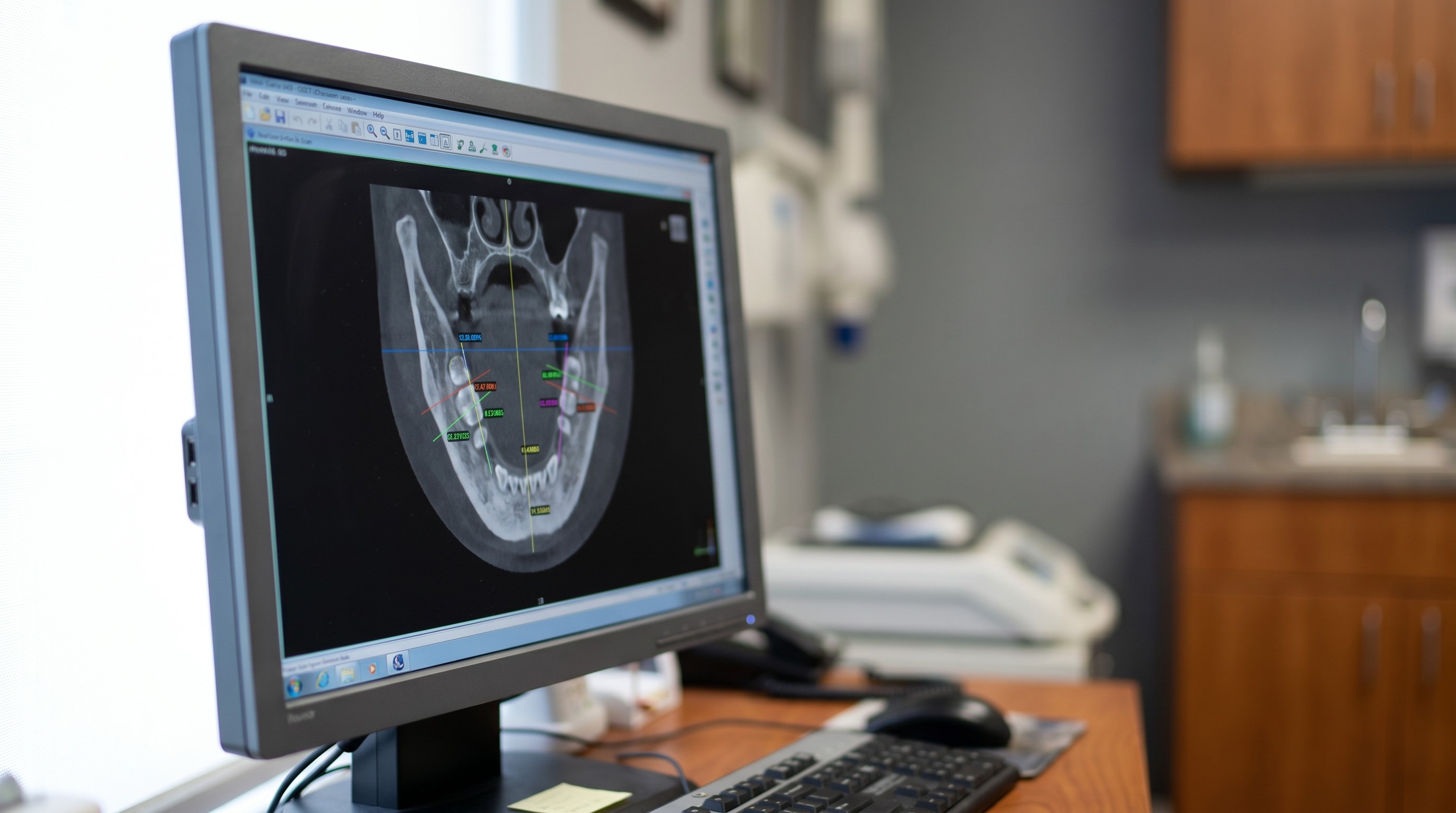
This is where modern implant dentistry has changed the most. The American Dental Association's clinical recommendations support CBCT (cone beam computed tomography) for accurate three-dimensional assessment of bone volume before implant surgery.
At our office in the Asian Trade District, Dr. Yeo runs every implant case through digital planning software. The CBCT measures exact bone height, width, and density at the planned implant site. The software then maps the ideal implant position relative to your nerve, sinus, and adjacent teeth.
You see whether grafting is needed before any surgery happens. No surprises in the chair. No "we'll figure it out when we get in there." That's the whole point of guided planning.
Patients driving in from Addison, Carrollton, or Farmers Branch usually leave their consultation knowing the entire plan, the timeline, and the cost. Every single time.
Frequently Asked Questions
Is a bone graft painful?
Most patients report less discomfort than they expected. Socket preservation grafts done at the time of extraction usually feel like the extraction itself. Larger augmentations and sinus lifts involve more swelling for a few days, but the procedure itself is done under local anesthesia and optional sedation, so you don't feel it happening. Ibuprofen handles most of the soreness afterward.
Can I get an implant the same day as my extraction to avoid a bone graft?
Sometimes, yes. If the tooth is being removed for a clean reason (a fracture or failed root canal without major infection) and the bone walls of the socket are intact, Dr. Yeo can often place the implant immediately. Even then, a small amount of graft material is usually packed around the implant to fill any gaps. It's quicker and gentler than a separate grafting visit.
How much does a bone graft add to the cost of an implant?
It varies. Socket preservation at the time of extraction is the least expensive option and often the most cost-effective in the long run because it prevents the need for larger grafts later. Ridge augmentation and sinus lifts cost more because they require additional materials and surgical time. We give you a complete written estimate after your CBCT scan so there are no surprises.
What happens if I refuse the bone graft?
If the bone truly isn't adequate and you decline grafting, the implant either cannot be placed or has a much higher risk of failure. In some cases we can angle the implant or choose a shorter fixture to avoid grafting entirely, but that's only possible when the CBCT shows enough usable bone in a slightly different position.
How do I know if my sinus needs to be lifted for an upper implant?
The CBCT scan answers this. We measure the distance from the top of your remaining bone to the floor of the maxillary sinus. If there are at least 10 millimeters, no lift is needed. Between 5 and 10 millimeters, a smaller crestal lift is often enough. Less than that usually means a lateral window sinus lift.
Plan your implant the right way
If you've been told you need a bone graft, or you're wondering whether you might, the answer starts with a 3D scan and a real conversation. Dr. Kwangjae Yeo and the team at Fresh Smile Dental Care in Dallas Koreatown plan every implant case digitally before any treatment begins. Call us at (214) 623-0880 to schedule your implant consultation.
Recommendations