How Long Do Dental Implants Last, and What Makes Them Fail Early?
The titanium implant post can last decades or a lifetime when properly placed and maintained. The visible crown on top usually lasts 10 to 15 years before replacement. Long-term success depends on daily hygiene, regular cleanings, controlling diabetes, avoiding smoking, and protecting against grinding.
The titanium implant post can last decades or a lifetime when properly placed and maintained. The visible crown on top usually lasts 10 to 15 years before replacement. Long-term success depends on daily hygiene, regular cleanings, controlling diabetes, avoiding smoking, and protecting against grinding.
At Fresh Smile Dental Care on Royal Lane, patients ask this question almost every day. They want to know if an implant will outlast the cheaper bridge or denture they were quoted somewhere else. The honest answer requires separating the implant into its three parts. Each part has its own clock.
Let's walk through it.
How long does each part of a dental implant actually last?
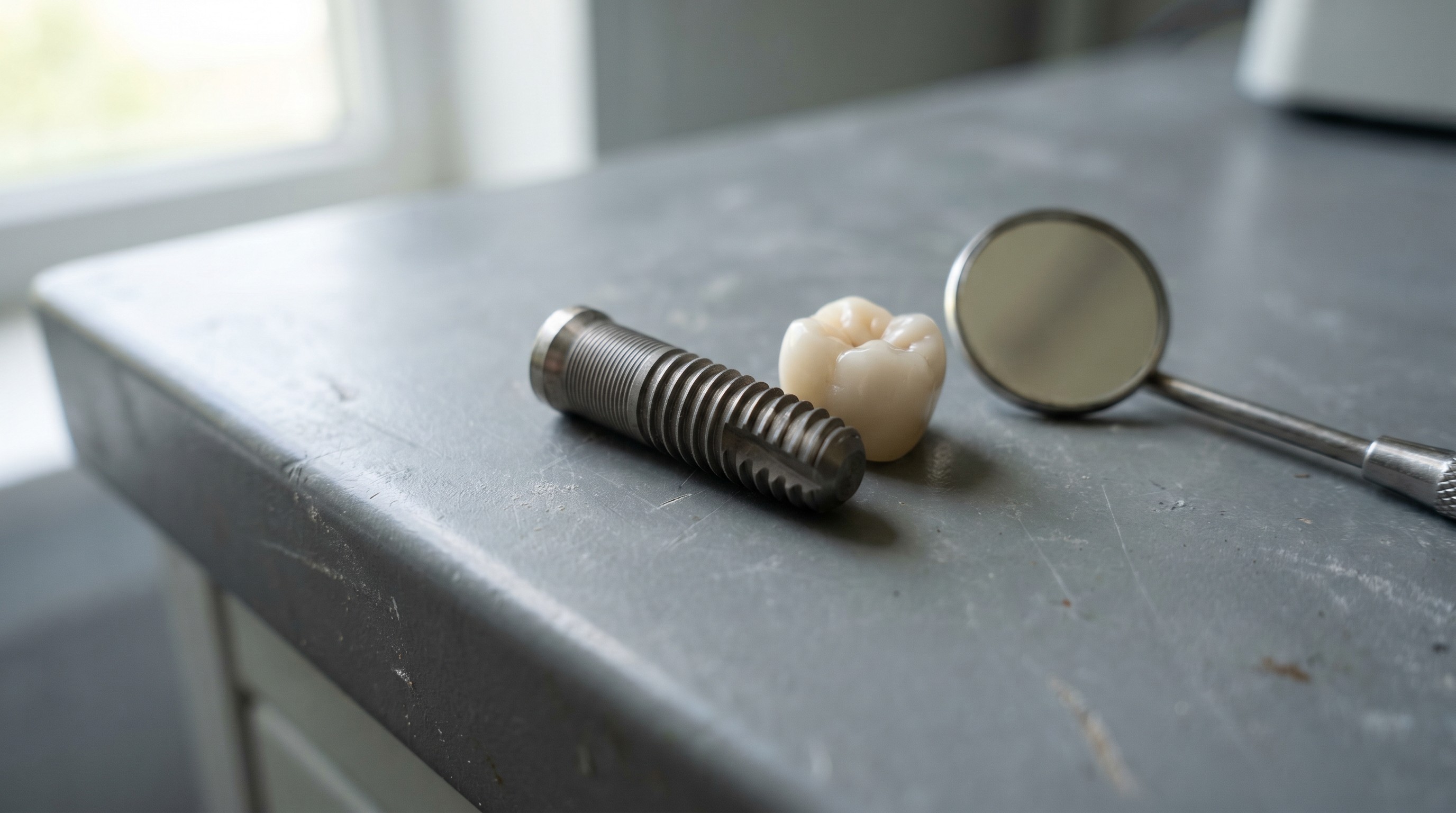
An implant is not one piece. It is three pieces stacked on top of each other, and each behaves differently over time.
The titanium post sits in your jawbone. Once it fuses to bone (a process called osseointegration), it can stay there for decades. Many patients keep the same post their entire life.
The abutment is the connector between the post and the crown. It is durable but replaceable if it loosens or fractures.
The crown is the visible white tooth on top. According to ADA patient education materials, implant crowns generally last 10 to 15 years before normal wear may warrant replacement.
So when you hear that dental implants "last a lifetime," that phrase refers to the titanium root. The tooth you see and chew with has a shorter timeline. That's the part most patients eventually swap out, and it's a much simpler procedure than replacing the post itself.
What does the research say about long-term implant survival?
Peer-reviewed systematic reviews in the Journal of Clinical Periodontology and Cochrane databases consistently report 10-year survival rates above 90 percent for endosseous dental implants. That number is strong. But it's worth understanding what "survival" means in dental literature.
Survival means the implant is still in the mouth. Success is a higher bar. It means the implant is still in place AND surrounded by healthy bone AND free of inflammation AND functioning normally. The success rate is always lower than the survival rate, which is why we pay attention to gum and bone health at every recall visit, not just whether the implant is still there.
Dr. Yeo plans every case with computer-guided surgery so the post lands in the strongest bone available, at the right angle, with predictable depth. That planning is what shifts the odds in your favor across decades.
Why do some implants fail early?
Early failures (within the first year) are usually about healing. Late failures (5+ years in) almost always come down to one or two preventable causes. Here's what we watch for at our office in the Asian Trade District.
Peri-implantitis. The American Academy of Periodontology identifies peri-implantitis as a leading cause of late implant failure. It is a bacterial inflammation around the implant that causes progressive bone loss. It behaves like gum disease, but around a metal post. Early signs are bleeding, redness, and tenderness when you brush.
Smoking. Research published in the Journal of Dental Research links smoking to significantly higher implant failure rates compared to non-smokers. Nicotine reduces blood flow to the gums and bone. Healing slows. Infection risk rises.
Uncontrolled diabetes. The ADA and NIDCR recognize uncontrolled diabetes as a risk factor for impaired healing and implant complications. Patients with well-managed A1C levels do well. Patients with consistently high blood sugar struggle.
Bruxism. Per the Journal of Prosthetic Dentistry, grinding can mechanically overload implants and contribute to component fracture or loosening. An implant doesn't have the natural shock-absorbing ligament a real tooth has. Grinding sends that force straight into the bone interface.
Poor initial placement. An implant placed at the wrong angle, in thin bone, or without the right primary stability is starting from behind on day one. This is why we screen bone volume before we touch anything.
What can you do to make your implant last as long as possible?
The good news: implant lifespan is largely in your hands. A patient from Carrollton who saw us last spring had an implant placed eight years ago by another office. She's never had an issue. Her habits explain why.
Brush twice daily and floss around the implant. Plaque around an implant causes the same problems plaque causes around a tooth, just faster.
Professional cleanings every six months. We use implant-safe instruments that won't scratch the titanium surface or the crown margin.
Wear a night guard if you grind. This is non-negotiable for bruxers.
Quit smoking. Even partial cessation helps.
Manage your A1C. If you're diabetic, keep your numbers steady.
Report problems early. Looseness, bleeding, a different bite feeling. Don't wait six months to mention it.
The patients who follow that list keep their implants for 20 to 30+ years. Simple as that.
When should you expect to replace the crown on your implant?
Porcelain and zirconia crowns are tough, but they are not invincible. After a decade or so, you may notice the crown looks duller than your natural teeth, the edges show a thin gray line, a small chip appears, or the bite shifts slightly. Those are signs the crown (not the implant) needs replacement.
Replacing a crown is straightforward. We unscrew or remove the old crown, take new impressions or a digital scan, and seat a fresh one onto the existing abutment and post. The titanium root stays exactly where it has been for years. No surgery. No bone grafting. No new healing period.
This is the part most patients don't realize when they compare implants to bridges. A bridge typically lasts 7 to 10 years, and when it fails, you usually need work on the supporting teeth on either side. With an implant, you swap out a single component. The foundation stays put.
A note about who we see
Our practice sits two blocks from the DART Green Line Royal Lane Station, in the officially designated Koreatown Dallas corridor. Patients drive in from Addison, Farmers Branch, and Preston Hollow. We offer care in English, Korean, and Spanish. Dr. Yeo has been placing implants for over ten years and served as a live-surgery instructor for DIO Implant and Hiossen. The planning is the same whether you're getting your first implant or your fourth.
Frequently Asked Questions
Can a dental implant last a lifetime?
The titanium post can, yes. Many patients keep the same implant root for the rest of their lives once it has fused with the bone. The crown on top is a different story and typically needs replacement somewhere around the 10 to 15 year mark.
What is the most common reason implants fail after several years?
Peri-implantitis. It's a bacterial inflammation around the implant that causes bone loss, and it's identified by the American Academy of Periodontology as a leading cause of late failure. It's also largely preventable with consistent home care and twice-yearly professional cleanings.
Do I need to replace my implant crown eventually?Most patients do, eventually. Porcelain and zirconia wear, stain, or chip over years of chewing. The replacement procedure is simple because we only swap the crown. The titanium root and abutment usually stay in place.
Does smoking shorten how long my implant will last?
Yes. Smoking is associated with significantly higher implant failure rates in the dental literature. Nicotine restricts blood flow to your gums and bone, which slows healing and raises infection risk. Quitting before surgery and staying off cigarettes afterward measurably improves your odds.
How often should I see the dentist after getting an implant?
Every six months for a cleaning and exam, same as for natural teeth. We check the gum tissue around the implant, take periodic X-rays to monitor bone levels, and clean the crown with instruments that won't damage the titanium surface. Catching issues early is what keeps implants in for decades.
If you're weighing an implant or wondering how long your current one will last, we're happy to take a look. Call Fresh Smile Dental Care at (214) 623-0880 to schedule a consultation with Dr. Yeo at our Royal Lane office.
Recommendations