Can I Get a Dental Implant the Same Day as a Tooth Extraction?
Yes, in many cases a dental implant can be placed the same day a tooth is extracted. This is called immediate implant placement. Candidates need healthy bone around the socket, no active infection, and stable health. A 3D CBCT scan and guided planning determine whether one visit is safe or a delayed approach is wiser.
Yes, in many cases a dental implant can be placed the same day a tooth is extracted. This is called immediate implant placement. Candidates need healthy bone around the socket, no active infection, and stable health. A 3D CBCT scan and guided planning determine whether one visit is safe or a delayed approach is wiser.
At Fresh Smile Dental Care, this is one of the first questions patients ask once they hear a tooth has to come out. They picture months with a gap, a flipper, or a missing front tooth at work. They want to know if one surgical visit can solve both problems. Sometimes it can. Sometimes the safer path is to wait. The honest answer depends on what the scan shows.
What does "same-day implant" actually mean?
Immediate implant placement means extracting the tooth and placing the titanium implant into the same socket during a single appointment. According to the American Academy of Implant Dentistry, the implant is positioned in the freshly prepared site at the same visit as the extraction, rather than waiting for the socket to heal first.
There is a second term that confuses people: immediate loading. That is when a temporary crown is attached the same day so you walk out with a visible tooth. Same-day placement does not always mean same-day crown. In most cases we place the implant during the visit, then attach the final crown three to six months later once the bone has fused around it.
Three timelines in plain English:
Immediate placement. Extraction and implant, same appointment.
Immediate loading. Implant and temporary tooth, same appointment.
Delayed placement. Extraction first, then implant three to six months later.
Who is a candidate for an immediate implant?
Not every tooth qualifies. Dr. Yeo looks at four things before recommending a same-day approach.
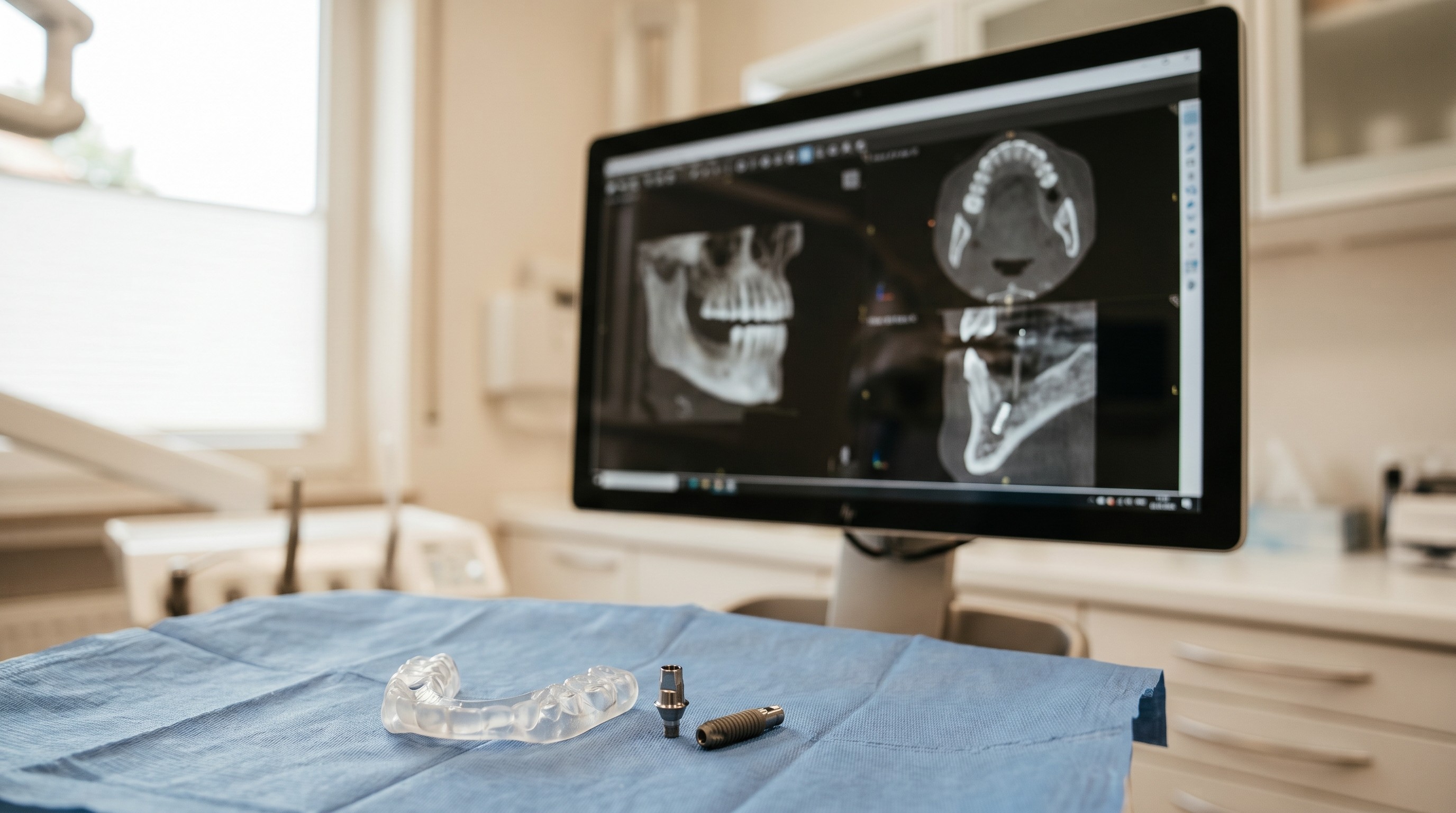
Bone volume. The walls of the socket need to be intact enough to hold the implant steady the moment it is placed. A CBCT scan shows this in three dimensions before we touch anything. The American Academy of Oral and Maxillofacial Radiology recommends cone-beam imaging for implant planning precisely because flat X-rays cannot show socket wall thickness.
No active infection. If there is an abscess or pus around the root, placing an implant into that site is risky. Consensus literature in oral and maxillofacial surgery flags active infection as a reason to delay.
Healthy gums and stable health. Controlled diabetes is workable. Uncontrolled is not. Smoking matters too. A Cochrane Review on dental implant outcomes found that smokers experience higher rates of complications and failure than non-smokers.
Tooth location. Front teeth and single-rooted teeth are often easier same-day candidates. Molars, with their three roots and wider sockets, are trickier but still possible in many cases with guided planning.
A 52-year-old patient who works at the Asian Trade District came in last spring with a cracked upper front tooth. The scan showed thick, healthy bone walls and no infection. One visit. One implant. He went back to work the next morning.
When is it safer to wait between extraction and implant?
Sometimes patience protects the long-term result. We recommend delayed placement when:
There is active infection at the tooth.
Bone loss is significant and grafting needs to heal first.
The gum tissue is thin in a visible front-tooth zone, where esthetics could suffer if the gum recedes.
The patient is a heavy smoker or has an uncontrolled medical condition.
A delayed timeline usually looks like this: extraction with a bone graft, three to six months of healing, then implant placement, then another three to six months before the crown. Yes, it is longer. It also gives the implant the best foundation we can build.
Rushing a same-day implant into a compromised socket is not faster. It is just a faster path to a problem.
What does the same-day procedure look like?
Before the visit, we take a 3D CBCT scan and plan the implant position digitally. By the time you sit down, the surgical guide is ready.
The visit itself usually runs one to two hours:
Local anesthesia, with sedation options if needed.
Atraumatic extraction. The tooth is removed gently so the socket walls stay intact.
The socket is cleaned thoroughly.
The implant is placed through a surgical guide for precise position and depth.
Bone graft material is often packed around the implant to fill any gap between the implant and the socket walls. The International Journal of Oral and Maxillofacial Implants describes this as standard practice in immediate cases.
A healing abutment or, in select cases, a temporary crown is attached.
You leave with sutures, after-care instructions, and a follow-up plan. Most patients are surprised at how routine it feels.
How does computer-guided surgery change the decision?
This is where Dr. Yeo's workflow matters. With ten-plus years of implant experience and a background as a live-surgery instructor for two implant manufacturers, he plans every immediate case digitally before the patient is in the chair.
What guided surgery actually changes:
The exact angle and depth of the implant are mapped on the CBCT before extraction.
A custom surgical guide controls placement during the procedure.
Chair time is shorter, which matters when you are combining two procedures.
Margins in immediate cases are tight. Guided placement makes those margins predictable.
That predictability is the whole reason we can offer same-day placement to patients who would have been told to wait a decade ago.
Recovery and what to expect after a same-day implant
Recovery for an immediate implant is similar to a delayed one, with a few extra cautions:
Soft-food diet for one to two weeks. Think rice porridge, soup, eggs, yogurt.
No chewing on the implant side until we clear it.
Gentle rinses, no straws, no smoking.
Osseointegration, the biological fusion of bone to the implant surface, takes three to six months according to NIDCR and ADA patient education. The final crown waits for that.
Follow-up visits at one week, one month, and at the crown delivery.
Patients commuting from Addison, Carrollton, Farmers Branch, and Preston Hollow often schedule recovery checks around their work week. The Royal Lane DART Green Line station is two blocks from the office, which a few of our downtown commuters use on the days they would rather not drive after sedation.
Frequently Asked Questions
Is a same-day implant as durable as a delayed implant?
When the patient is a good candidate, long-term success rates for immediate and delayed implants are comparable in the published literature. The key is candidacy. A same-day implant in a compromised site is not the same as a same-day implant in a healthy one. That is why we screen carefully before recommending it.
Will I leave the office with a visible tooth that day?
Sometimes, sometimes not. For front teeth where esthetics matter, we often attach a temporary crown or a removable flipper so you are not walking around with a gap. For back teeth, a healing abutment is usually enough until the final crown is ready.
How much more does immediate implant placement cost?Combining extraction and implant into one visit can actually reduce total cost compared to two separate surgical visits with a graft in between. Pricing depends on whether bone grafting, sedation, or a temporary crown is involved. We provide a written estimate after the CBCT scan and consultation.
Can I get an immediate implant for a molar?
Often, yes. Molar sockets are wider and have multiple roots, which makes the surgery more technique-sensitive. Guided planning and bone graft material around the implant make immediate molar placement predictable in many cases. The CBCT tells us before we start.
What happens if my dentist plans a same-day implant but finds infection during extraction?
We switch plans. If active infection or bone loss shows up during the extraction that the scan did not fully reveal, we place a bone graft, close the site, and bring you back in three to six months for the implant. Your safety wins over the original schedule. Every single time.
Ready to find out if a same-day implant is right for you?
If you have a failing tooth and want to know whether one visit can replace it, call Fresh Smile Dental Care at (214) 623-0880. Dr. Yeo will review your CBCT scan with you, explain your options in English, Korean, or Spanish, and give you an honest answer about timing. We are located at 1894 Royal Ln #104 in Northwest Dallas, inside the Koreatown corridor.
Recommendations