Why Does My Jaw Click or Pop When I Open My Mouth?
A clicking or popping jaw is usually caused by the small cushioning disc inside your temporomandibular joint slipping out of position as you open and close. If the sound is painless and your jaw moves freely, it's often harmless. See a dentist if you have pain, locking, headaches, or morning jaw soreness.
A clicking or popping jaw is usually caused by the small cushioning disc inside your temporomandibular joint slipping out of position as you open and close your mouth. If the sound is painless and your jaw still moves freely, it is often harmless. You should see a dentist if you also notice pain, locking, frequent headaches, or morning jaw soreness.
At Fresh Smile Dental Care on Royal Lane, we get this question almost every week. A patient yawns in a meeting, hears a pop, and suddenly wonders if something is wrong. Most of the time, the answer is reassuring. Sometimes it is the first hint of a problem worth catching early.
What Is Actually Clicking Inside My Jaw?
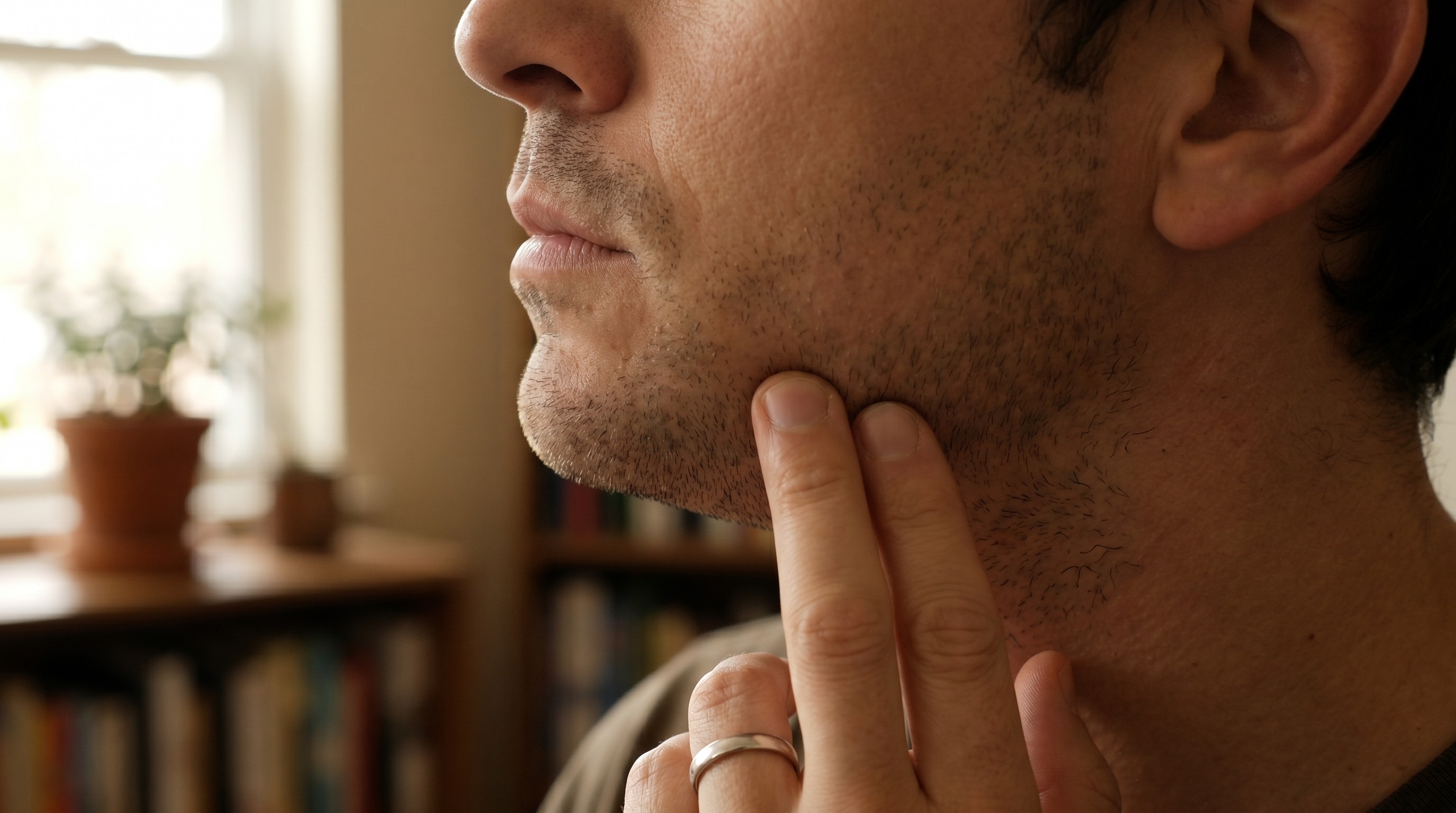
Your temporomandibular joint (TMJ) sits just in front of each ear. It is the joint that lets you chew, talk, and yawn. Inside it, a small piece of cartilage called the articular disc cushions the bones and helps them glide smoothly.
When that disc slips slightly out of position, the jawbone has to hop over it as you open. That hop is the click. According to the American Academy of Orofacial Pain and the National Institute of Dental and Craniofacial Research, this disc displacement is the most common cause of joint noises in the jaw.
One side often clicks more than the other. That is normal. You chew, sleep, and hold your phone unevenly, so one joint takes more wear than the other. Simple as that.
Is Jaw Clicking Always a Problem?
No. A painless, occasional click without locking usually does not need treatment. The American Academy of Orofacial Pain notes that painless joint sounds without functional limitation generally require monitoring, not intervention.
Watch for these red flags instead:
Pain in the joint, ear, or temple
Jaw that locks open or closed, even briefly
Limited opening (you cannot fit three stacked fingers between your front teeth)
Morning soreness, headaches, or ear fullness
Clicking that has become daily and louder over weeks
A one-time pop after a big yawn is different from chronic daily clicking with pain. The first is your joint resetting. The second is your joint asking for help.
What Causes the Jaw to Start Clicking?
Several everyday things load the joint in ways it does not love:
Teeth grinding and clenching (bruxism), especially at night. The American Dental Association identifies bruxism as a major contributor to TMJ symptoms.
Stress-related muscle tension. Your jaw muscles hold tension the same way your shoulders do.
Bite misalignment or missing back teeth that change how the joint loads.
Jaw trauma or whiplash, even from years ago.
Daily habits: chewing gum all day, biting nails, resting your chin on your hand, side sleeping with pressure on the jaw.
The National Institute of Dental and Craniofacial Research estimates that temporomandibular disorders affect 5% to 12% of the U.S. population, and they are more common in women and in people between ages 20 and 40. If you are in that group and clenching through deadlines, you are not imagining the connection.
What Can I Do at Home to Calm a Clicking Jaw?
Start gentle. Most flare-ups quiet down within a week or two with basic self-care:
Soft-food diet for a few days. Skip the bagels, steak, and chewy candy.
Avoid wide yawns and gum chewing. Cover a yawn with your hand to limit how far you open.
Warm compresses on the joint for 10 to 15 minutes, twice a day.
Gentle stretches. Open and close slowly in a straight line in front of a mirror.
Posture check. A forward head posture at your desk pulls the jaw out of alignment all day.
Over-the-counter anti-inflammatories like ibuprofen, if your doctor says they are safe for you.
If you wake up with a sore jaw, you are probably grinding at night. That one is harder to fix on your own.
When Should I See a Dentist About Jaw Clicking?
Book a visit if any of these apply:
Pain that lasts more than a week or two
Jaw that locks open or closed
Clicking with tooth wear, chipped enamel, or morning headaches
Ringing ears or ear fullness with no infection
You notice your partner hears you grinding at night
An evaluation is straightforward. We look at how your jaw opens, palpate the muscles on the sides of your face and neck, check your bite, and examine your teeth for grinding wear. If needed, we take imaging. Most patients leave with a clear plan, not a vague worry.
The NIDCR and ADA both recommend conservative, reversible treatments first. That usually means a custom night guard, bite refinement, stress and habit coaching, and sometimes physical therapy. Surgery is rare and only considered after non-invasive options have been tried.
Most jaw clicking is the joint asking for a small adjustment, not a major repair.
How We Evaluate Jaw Joint Issues at Fresh Smile Dental Care
We sit in the Dallas Koreatown corridor on Royal Lane, inside the Asian Trade District. A software engineer in her early thirties came in last month after a coworker pointed out she was clenching her jaw during every meeting. She lives near Harry Hines and walks over from the Royal Lane DART Green Line Station, which is two blocks from our office. Her exam showed flattened back teeth and tender chewing muscles. No locking, no severe pain. She left with a custom night guard, a posture tip for her desk, and a follow-up in six weeks. The clicking faded within a month.
That is the pattern we see often. Northwest Dallas and Farmers Branch residents, commuters off Marsh Lane and I-635, professionals working long hours. Stress lives in the jaw.
We offer evaluations in English, Korean, and Spanish, because the neighborhood is multilingual and your bite shouldn't get lost in translation. Our approach is conservative first. Night guards before drills. Bite refinement before bigger procedures. Referrals to specialists only when truly needed.
Frequently Asked Questions
Can a clicking jaw go away on its own?
Often, yes. Mild, painless clicking from a temporary muscle strain or stress can resolve in a week or two with soft food, warm compresses, and avoiding wide yawns. If it has not improved after two weeks, or if pain or locking joins in, get it checked.
Is jaw popping a sign I need surgery?
Almost never. Both the NIDCR and the American Dental Association recommend reversible, conservative treatments as first-line care. Most patients improve with a night guard, self-care, and bite adjustment. Surgery is reserved for a small minority of severe cases that do not respond to anything else.
Can a night guard stop my jaw from clicking?A custom night guard will not always silence the click itself, but it usually reduces the muscle tension and joint loading that make clicking worse. Many patients tell us morning soreness, headaches, and daytime clenching all drop within a few weeks of consistent use.
Why does my jaw click only on one side?
Most people chew, sleep, and hold their phone unevenly, so one joint takes more wear than the other. A bite that loads one side harder, or an old injury to that side, also concentrates the problem. One-sided clicking is common and not automatically more serious.
Should I see a dentist or a doctor for jaw clicking?
Start with a dentist. Dentists are trained to evaluate the bite, the chewing muscles, the TMJ, and the wear patterns on your teeth all in one visit. If the issue turns out to be muscular, neurological, or related to another condition, we refer to the right specialist from there.
If your jaw has been clicking and you are not sure whether to worry, we are happy to take a look. Call Fresh Smile Dental Care at (214) 623-0880 to schedule an evaluation, or book online through Zocdoc. We are open Monday, Tuesday, Thursday, and Friday from 9 AM to 5 PM at 1894 Royal Ln #104 in Dallas.
Recommendations