Why Do Some Dental Implants Fail? Warning Signs and Prevention
Dental implants fail in roughly 5 to 10% of cases, usually from peri-implantitis, smoking, uncontrolled diabetes, heavy grinding, or insufficient bone at placement. Early warning signs include persistent pain, swelling, gum recession, a loose crown, or a bad taste around the implant. Most failures are preventable with good hygiene, regular cleanings, and careful surgical planning.
Dental implants fail in roughly 5 to 10% of cases, usually from peri-implantitis (gum and bone infection), smoking, uncontrolled diabetes, heavy grinding, or insufficient bone at placement. Early warning signs include persistent pain, swelling, gum recession, a loose-feeling crown, or a bad taste around the implant. Most failures are preventable.
At Fresh Smile Dental Care on Royal Lane, we hear the same worry from new implant consultations almost every week. A friend, a coworker, or a relative had an implant that did not last, and now the patient wants to know if the same thing could happen to them. It is a fair question. The honest answer is that failures are uncommon but real, and almost every one of them has a cause we can name and plan around.
How common is dental implant failure?
Long-term studies in journals like the Journal of Clinical Periodontology consistently report implant success rates between 90% and 95% over 10 years. That means most implants placed today will still be functioning a decade later. Failure is the exception, not the rule.
When clinicians do talk about failure, we sort it into two timing buckets. Early failure happens before the implant fully bonds to the bone, usually within the first three to six months. Late failure happens after the implant has integrated and been used for chewing, sometimes years later. The causes for each look different, which is why the timing matters.
What are the early warning signs of a failing implant?
Most failing implants give you a heads-up. The trick is knowing what to listen for.
Persistent pain or throbbing weeks after healing should be done
Swelling, redness, or pus around the gum at the implant site
Gum recession that starts exposing the metal threads
A loose feeling in the crown, the abutment, or the implant itself
Difficulty chewing on that side that was not there a month ago
Bad taste or persistent bad breath localized to one specific area
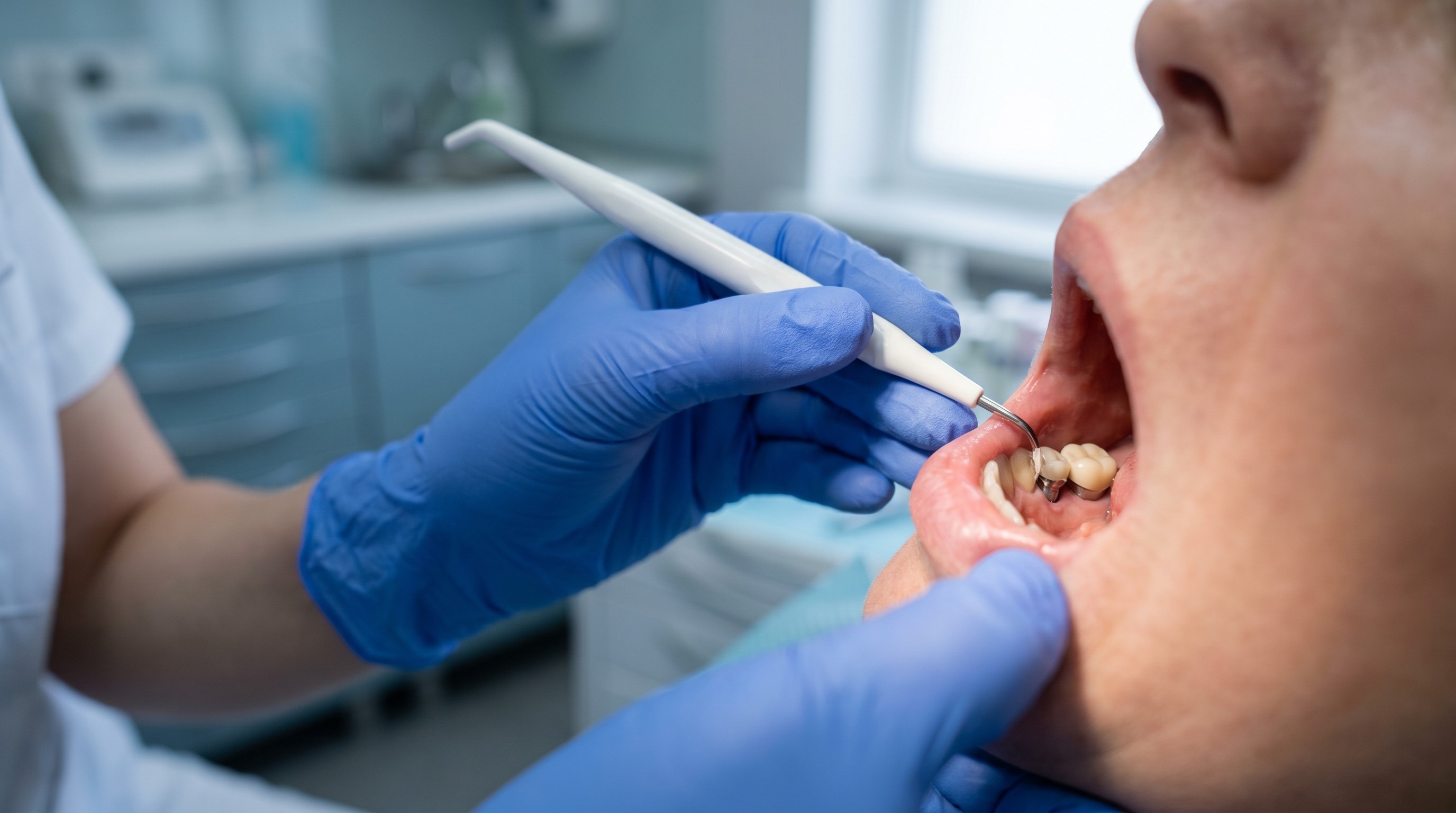
One sign on its own is not a diagnosis. Two or more together is a reason to be seen this week, not next month. A teacher who lives near Walnut Hill came in last spring after noticing both gum tenderness and a faint metallic taste around an implant placed years earlier elsewhere. We caught early peri-implantitis. A deep cleaning around the implant and tighter home care stopped the bone loss in its tracks.
Why do dental implants fail? Six common causes
Implants do not fail randomly. Almost every case traces back to one of six culprits.
1. Peri-implantitis
According to the American Academy of Periodontology, peri-implantitis is the leading cause of late implant failure. It is a bacterial infection of the gum and bone around the implant, essentially gum disease aimed at an implant instead of a tooth. Bone melts away. The implant loosens. Without intervention, it is lost.
2. Insufficient bone at placement
An implant needs enough healthy bone to grip. When the bone is too thin or too soft, the implant cannot integrate properly. This is why we use 3D imaging to map bone before surgery and recommend grafting when the volume is borderline.
3. Smoking and nicotine
The ADA and decades of dental research are clear that smoking significantly raises implant failure risk. Nicotine constricts blood vessels and starves the healing site of oxygen. Vaping is not a free pass either.
4. Uncontrolled diabetes and systemic conditions
Research from the NIDCR links uncontrolled diabetes to higher implant complication and failure rates. The same goes for some autoimmune conditions and certain medications. Well-managed diabetes, on the other hand, is usually compatible with successful implants.
5. Heavy bite force and grinding
Bruxism is a quiet killer of dental work. Prosthodontic literature shows that excessive grinding loads can mechanically overload implants and the crowns on top of them. Many patients have no idea they grind until we point out the wear.
6. Surgical factors
Implant angle, depth, and how the bone is handled during placement matter enormously. Overheated bone does not heal well. A poorly angled implant fights the bite for its entire life. This is the part the patient cannot control directly. The dentist can.
How can patients prevent implant failure?
Most of the prevention list is boring. That is the point. Boring works.
Brush and floss daily around the implant, just like a natural tooth. A water flosser helps a lot.
Professional cleanings every 6 months, or every 3 to 4 months if you are higher risk (diabetic, former smoker, heavy plaque builder).
Quit smoking before surgery and stay off it during healing. This single change moves your odds dramatically.
Manage blood sugar and blood pressure. Your medical doctor and your dentist are on the same team here.
Wear a night guard if grinding is diagnosed. A custom guard costs a fraction of replacing an implant.
Choose computer-guided planning. 3D-mapped placement positions the implant where bone, nerves, and bite forces all line up. Less guesswork. Better outcomes.
We see this play out across our Northwest Dallas patient base every week. A retired Texas Instruments engineer who lives in Preston Hollow follows a 3-month cleaning schedule with us. His implants are 8 years in and look like the day they were placed. Boring works.
What happens if an implant fails. Can it be replaced?
Yes, in most cases. A failed implant is usually removed gently, often with very little additional bone loss. If bone has been damaged by infection or grinding, a graft may be needed before placing a new implant. Plan on a 3 to 6 month healing period before re-implantation.
The encouraging part is that one failure does not condemn you to a second. We have patients across Koreatown Dallas and Farmers Branch who lost an implant years ago at another office and now have a successful replacement here. The key is identifying why the first one failed and changing that variable. Same approach, same result. A new approach, a different result.
Most failing implants give you a heads-up. The trick is knowing what to listen for.
Frequently Asked Questions
Does a failing dental implant always hurt?
No. Some failures are silent, especially in the early stages of peri-implantitis. Bone can recede with very little discomfort until the implant is already loose. That is why we check the bone level around your implant at every cleaning visit, even when you feel fine.
Can a loose implant be tightened, or does it have to be removed?
It depends on what is loose. A loose crown or abutment screw can often be re-tightened or replaced. If the implant body itself is moving inside the bone, that means osseointegration has been lost and the implant needs to come out. We use imaging and gentle clinical testing to tell the difference.
How soon after surgery would I know if an implant is failing?
Early failure usually shows up in the first 3 to 6 months, often as ongoing pain, a feeling of micro-movement, or stubborn swelling. Late failure can take years and is usually driven by gum disease or grinding. We schedule specific check-ins at 2 weeks, 3 months, and 6 months to catch problems while they are still fixable.
Will my insurance cover replacing a failed implant?
It varies widely. Some plans cover replacement if the original implant was placed years ago, others have exclusions or waiting periods. We help patients verify benefits before any treatment and lay out written estimates. Call us at (214) 623-0880 and we will walk through your specific plan.
Are full-arch implants more or less likely to fail than single implants?
Full-arch restorations spread bite force across multiple implants, which is generally protective if one implant has trouble. The remaining implants often hold the bridge in place while we treat the affected site. Single implants do not have that backup, which is one reason hygiene and night guards matter even more for them.
If you have an implant that does not feel quite right, or you are considering one and want a realistic conversation about risk, call Fresh Smile Dental Care at (214) 623-0880. Our office sits right on Royal Lane in Koreatown Dallas, two blocks from the DART Green Line Royal Lane Station, and we see patients in English, Korean, and Spanish.
Recommendations