¿Cuánto duran los implantes dentales y por qué algunos fallan antes de tiempo?
El poste de titanio del implante puede durar décadas o toda la vida cuando se coloca y se cuida adecuadamente. La corona visible normalmente dura entre 10 y 15 años antes de necesitar reemplazo. El éxito a largo plazo depende de la higiene diaria, limpiezas regulares, controlar afecciones como la diabetes, evitar el tabaco y proteger los dientes del bruxismo.
The titanium implant post can last for decades or even a lifetime when integrated into the bone and properly maintained. The visible crown on top, on the other hand, typically lasts between 10 and 15 years before normal wear and tear justifies its replacement. Long-term success depends on daily hygiene, professional cleanings, controlling conditions like diabetes, quitting smoking, and protecting against bruxism.
At Fresh Smile Dental Care, we see patients who arrive with the idea that an implant is "forever" and nothing else. That is almost true. But it is helpful to understand which part lasts forever and which part does not. That detail changes the conversation about cost, maintenance, and what to expect ten or twenty years after surgery.
How long does each part of a dental implant last?
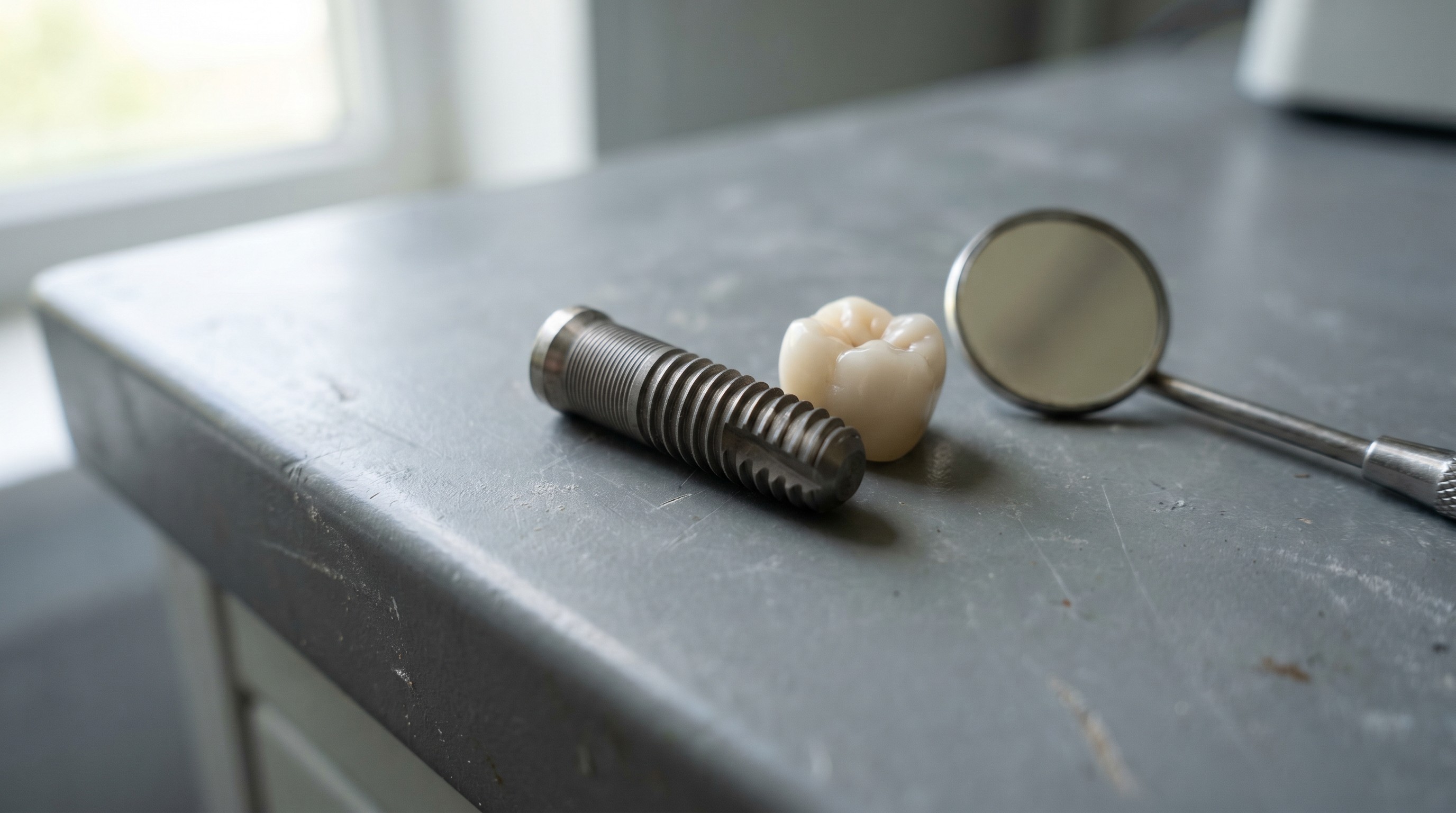
A dental implant has three components, and each has its own lifespan. It is helpful to separate them.
Titanium post: this is the screw that fuses with the bone. It can last decades or the rest of the patient's life when osseointegration is successful.
Abutment: the intermediate connector piece. It is highly durable, but it can loosen or be replaced without touching the post.
Crown: the visible part. Porcelain or zirconia. It typically requires replacement between 10 and 15 years due to wear, chipping, or color changes, according to ADA educational materials.
When someone says "my implant lasts a lifetime," they are technically talking about the post. The crown is a restoration, and like any restoration, it experiences wear.
What does the research say about long-term survival?
Systematic reviews published in the Journal of Clinical Periodontology and Cochrane reviews report 10-year survival rates above 90% for endosseous implants. That is excellent compared to almost any other dental prosthesis.
But there is an important difference between two terms:
Survival: the implant is still in place.
Success: the implant is in place and surrounded by healthy bone, with no inflammation, no pain, and no bone loss.
The 90% figure generally refers to survival. The clinical success rate is slightly lower. That is why long-term follow-up matters so much.
Dr. Kwangjae Yeo, who has served as a live surgery instructor for DIO Implant and Hiossen, plans each case using computer-guided surgery. This initial precision is what most influences whether an implant performs well at the ten-year mark.
Why do some implants fail prematurely?
Implants do not fail by chance. There is almost always an identifiable cause.
Peri-implantitis
This is the leading cause of late implant failure. According to the American Academy of Periodontology, peri-implantitis is a bacterial inflammation around the implant that causes progressive bone loss. It starts silently. Without regular cleanings, it advances.
Tobacco Use
Smoking doubles or triples the risk of failure, according to data published in the Journal of Dental Research. Smoke reduces blood flow to the gums and impairs healing.
Uncontrolled Diabetes
The ADA and the NIDCR identify poorly controlled diabetes as a risk factor for implant complications. High blood sugar directly affects healing and the immune response.
Bruxism
Grinding your teeth loads the implant with forces it was not designed to handle. The Journal of Prosthetic Dentistry documents how bruxism contributes to component fracture and abutment loosening.
Insufficient Surgical Planning
Inadequate bone, poor initial stability, incorrect angulation. Computer-guided surgery greatly reduces these errors. Planning changes the ten-year outcome.
What can you do to make your implant last as long as possible?
Maintenance is simple but non-negotiable.
Brush twice a day and use floss or interdental brushes around the implant.
Professional cleanings every 6 months using implant-safe instruments (titanium or plastic, not metals that scratch the post).
Nightguard if you grind your teeth. No exceptions.
Quit smoking. Control blood glucose if you have diabetes.
Notify us immediately if you notice mobility, bleeding, or discomfort. Early detection changes everything.
A patient who commutes from Addison on the DART Green Line, getting off at the Royal Lane station just two blocks from the office, recently came in for her seven-year checkup. Her posterior implant looks perfect. The reason is simple. She flosses every day, uses a nightguard, and hasn't missed a single cleaning since her surgery.
That is the whole recipe.
When should you expect to replace your implant crown?
Porcelain or zirconia implant crowns last an average of 10 to 15 years, though many continue to function longer. Signs that it is time to replace the crown, not the implant, include:
Chipping or fracturing of the crown material.
Visible staining that does not respond to polishing.
Occlusal wear that changes the bite.
An open margin where plaque accumulates.
Replacing a crown is much simpler than replacing the post. The old crown is unscrewed or removed, a digital impression is taken, and a new one is placed on the same post. The patient keeps their original implant.
We see many patients from Koreatown Dallas, Farmers Branch, and Carrollton at this second stage, years after their original surgery. Our bilingual team in English, Korean, and Spanish makes this follow-up consultation comfortable regardless of your preferred language.
A well-planned implant is a decades-long investment. The crown on top is a restoration, and like all restorations, it is eventually replaced.
Frequently Asked Questions
Can a dental implant last a lifetime?
The titanium post can last a lifetime in many patients when osseointegration is successful and hygiene is maintained. The visible crown is different. It typically requires replacement between 10 and 15 years due to normal wear. That is why it is important to distinguish between the life of the implant and the life of the crown when talking about "lasting forever."
What is the most common reason for implant failure after several years?
Peri-implantitis. This is a bacterial inflammation around the implant that causes progressive bone loss, according to the American Academy of Periodontology. It begins without pain, making it dangerous. Regular professional cleanings with implant-safe instruments are the best defense, along with daily flossing or using interdental brushes around the implant.
Will I have to replace my implant crown eventually?
Probably yes. Porcelain and zirconia implant crowns last between 10 and 15 years on average, though many function longer. The good news is that replacing the crown does not require touching the titanium post. The old crown is removed, a digital impression is taken, and a new one is placed on the same implant.
Does smoking shorten how long my implant lasts?
Yes, significantly. Smoking is associated with considerably higher implant failure rates compared to non-smokers, according to the Journal of Dental Research. Smoke reduces blood flow to the gums, delays healing, and increases the risk of peri-implantitis. If you are considering an implant, quitting smoking before surgery improves the long-term prognosis.
How often should I see the dentist after getting an implant?
Every 6 months for a cleaning and exam, just like with natural teeth, although some patients with risk factors benefit from visits every 3 or 4 months. At each appointment, we check the tissue around the implant, measure pocket depths, and, when appropriate, take X-rays to confirm that bone levels remain stable.
Speak with Us About Your Implant
If you are considering an implant or already have one and want to ensure you are taking good care of it, Dr. Yeo welcomes you to Fresh Smile Dental Care at 1894 Royal Ln #104, in the Koreatown Dallas corridor. We serve patients in English, Korean, and Spanish. Call (214) 623-0880 to schedule your consultation.
Recomendaciones